

When we settle in to play Mine Slot, the turning reels and tumbling gems create an feeling that feels nearly tangible, as though the game has a memory, a mood, or a rhythm we can master https://mineslot.co.uk. The reality is far more fascinating and, for many players, unexpectedly liberating. Every symbol that appears, every bonus trigger, and every win amount is governed by a piece of software called a random number generator, or RNG. We are going to delve into exactly how this technology works inside Mine Slot, what it means for the honesty of the game, and why understanding it can change the way we handle each session. This is not about diminishing the excitement but about equipping ourselves with genuine knowledge that cuts through the myths and helps us make more informed decisions at the reels.
How a Random Number Generator Really Works
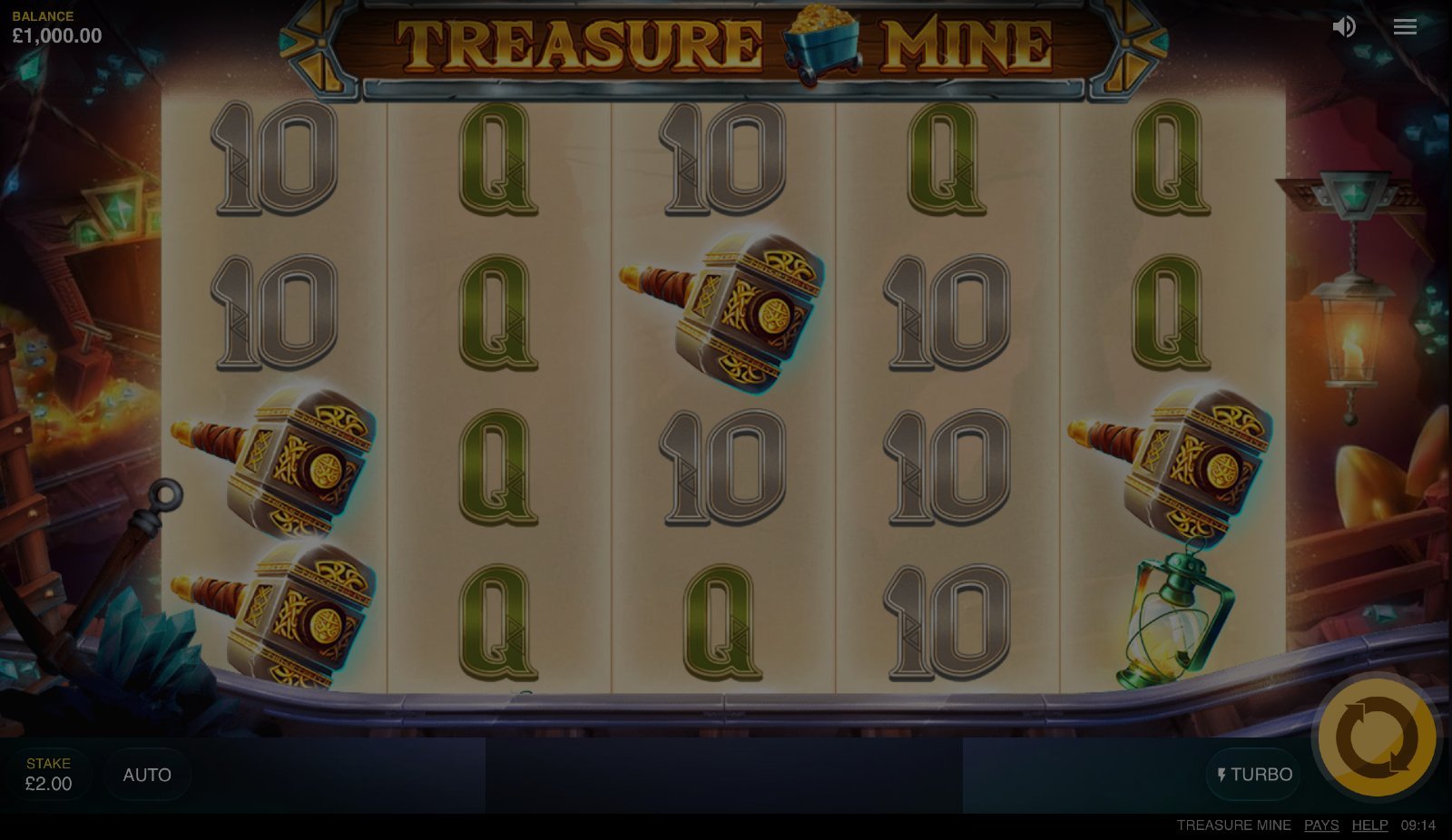
At its core, a random number generator in a contemporary online slot like Mine Slot is not completely random in the universal sense. It is a pseudorandom number generator, a mathematical algorithm that produces a sequence of numbers so unforeseeable and evenly distributed that it is statistically indistinguishable from true randomness. The process commences with a seed value, often sourced from an external entropy source such as server noise or hardware fluctuations, and then uses a complex formula to turn that seed into a stream of values. Every millisecond, irrespective of whether anyone is playing, the RNG inside Mine Slot iterates through billions of possible number combinations, each one relating to a different arrangement of symbols on the game’s virtual reels. By the time we hit the spin button, the outcome has already been chosen from that constant numerical cascade.
What matters most for players is that this mechanism makes every single spin completely unrelated of everything that came before it. The RNG inside Mine Slot has no idea of a dry spell, a hot streak, or a near miss. It simply produces a number at the exact instant we request a spin, and the game’s software links that number to a specific result on the paytable. If we were to look under the hood, we would see that the algorithm is built to pass rigorous statistical tests for uniformity and unpredictability, including the diehard tests and the NIST suite. This ensures that over millions of spins, the distribution of symbols and wins will match the intended mathematical model, providing us a game that operates exactly as advertised without any hidden patterns or biases.
In what manner Mine Slot Employs the RNG to Decide Every Spin
To understand the RNG’s function within Mine Slot, we must picture what happens between the instant our finger exits the spin button and the moment the reels halt. The game software obtains a number from the continuous stream produced by the RNG at that precise point. That number is then run through a mapping algorithm that translates it into positions for each virtual reel strip. In Mine Slot, which we perceive as a five-reel, three-row grid with twenty fixed paylines, this means the RNG determines exactly which symbols will be displayed on the screen and where they will land. Because the number is recorded at millisecond precision, the result is effectively unattainable for any human to impact or predict, making every spin a fresh event controlled solely by chance.
The reel strips themselves are not simple sequences of equally distributed symbols. Each strip holds a carefully weighted set of symbols where high-paying character icons, such as the dynamite wild or the mine cart scatter, appear far less frequently than the lower-value gemstone symbols. The RNG’s output selects a stop position on each strip, but the weighting assures the game’s overall return to player percentage can be reached over the long term. For Mine Slot, this weighting is particularly noticeable during the base game, where clusters of low-paying symbols happen frequently, while the sought-after scatter symbols that activate the free spins feature appear only on specific reels, strengthening the excitement of those rare bonus entries.
The Return to Player and Variance Explained
When users talk about the mechanics of Mine Slot, two terms come up often: player return and risk. The RTP is a statistical figure that indicates how much of all bet cash the game is designed to give back to gamblers over an huge number of spins. While we are unable to cite a value that is not stated on the game’s official details page, slots like Mine Slot usually work with an RTP in the area of 95% to 97%. This figure is not a assurance for our personal session; it is the extended statistical prediction embedded in the RNG mapping and the reel weights. The RNG by itself does not aim for a payout figure spin by spin, but over millions of outcomes the adjusted symbol allocation automatically provides the intended RTP, forming a house edge that is statistically steady.
Risk, on the flip hand, describes the uncertainty structure and payout regularity. In our experience with Mine Slot, we recognise a mid-to-high volatility structure, indicating the game tends to provide fewer frequent base game wins but builds genuine tension around the bonus rounds, which contain the possibility for larger rewards. The RNG manages this as well, because the program’s symbol weights define the likelihood of hitting winning combinations and entering the bonus round. A high-variance setup will place longer stretches of unsuccessful or low-value spins between those gratifying instances where the free spins or multipliers activate, and that is totally a result of how the RNG’s output works with the reel strips. Grasping this aids us set realistic expectations about the rhythm of the game.
Extra Features and the Function of Chance
Mine Slot features several bonus features that inject additional layers of randomness, and each one is controlled by the same RNG that runs the base game. explore the site The free spins feature is activated when three or more scatter symbols appear anywhere on reels two, three, and four. Because the scatter symbol is fairly rare on its designated strips, the RNG must generate the precise values that correspond to those stop positions, and it does so without any reference to how long it has been since the last trigger. This is a crucial point: the likelihood of hitting the scatters on any given spin remains constant, whether we have just activated the feature twice in a row or have gone three hundred spins without spotting a single scatter.
Once the free spins are active, the game often adds a multiplier feature that grows with each winning cascade or with special multiplier wild symbols that emerge only during the bonus round. The RNG keeps to work in exactly the same way, picking random stop positions for those free spins. The difference is that the active multiplier values are overlaid onto the usual paytable, creating the possibility of substantial swings. In some bonus structures, a pick-me round may occur where we choose from hidden objects to uncover extra free spins or an increased multiplier, but even here the conclusion is pre-set by the RNG at the moment of selection, ensuring the visual choice is purely decorative and for enjoyment. There is no skill element that can affect the outcome, and that preserves the fairness of the game.
- The dynamite wild symbol substitutes for all regular paying symbols to complete winning combinations and is itself configured to show up only on reels two, three, and four.
- Scatter symbols initiate the free spins feature with three or more in view, granting an initial set of free games plus a random multiplier range.
- During free spins, each win that involves a wild may boost the active multiplier, with the RNG establishing whether a wild appears on each free spin according to the same reel weightings.
- The maximum win potential is restricted, and while exact figures differ, games of this type commonly offer up to 5,000 times the stake, with the RNG making such an event exceptionally rare.
Verification and Validation: Who Verifies the RNG?
No discussion about the accuracy of random number generators would be thorough without addressing how we can trust that the RNG inside Mine Slot is genuinely fair. All reputable online slots, including those targeted at UK players, must pass independent testing and certification by recognized laboratories before they can be made available to the market. Organisations like eCOGRA, iTech Labs, GLI, and Quinel carry out thorough analyses of the game’s RNG algorithm and its implementation. They perform billions of simulated spins to confirm that the spread of outcomes matches the stated RTP within an tolerable margin of error, that no foreseeable patterns occur, and that the software cannot be tampered with by the operator or the player. These findings are often available to the public, and we suggest checking the game’s information section or the provider’s website for a certification badge.
In the UK market, the Gambling Commission stipulates that all game software satisfies strict technical standards, including a specific condition that RNGs cannot be influenced by external factors once the game is active. This implies the Mine Slot we play on our mobile or desktop is periodically audited by the testing house even after deployment. The checks apply to the random choice during bonus features and the true independence of each spin. For us as players, this signifies we can sit down with assurance that the game is not altering its behaviour based on our balance, our betting habits, or the time of day. The RNG is a secured, provable piece of code, and the certification offers us the only guarantee we need that the numbers are not manipulated.
Widespread RNG Misconceptions and Why They Are Incorrect
In spite of the openness of RNG systems, myths continue that can cause players to take poor choices. One of the most persistent is the idea that after a long streak of dead spins, the game is ready to reward. The RNG in Mine Slot has no memory; it does not track how many losing spins have taken place. The probability of hitting a bonus-inducing scatter set remains exactly the unchanged on spin number four hundred as it was on spin instance one. Thinking otherwise contributes to a dangerous mental tracking where we increase our bets to chase a illusory due win, which is just the conduct the mathematical framework of the game does not compensate.
Another prevalent fallacy involves the idea of near failures, where two scatters land and the third reel falls short. Some players interpret this as the game mocking them, suggesting that a win was nearly reached. In truth, the RNG determined a full set of reel spots instantly, and the visual representation simply reveals a arrangement that contains two scatters. The game does not recognize it has generated a near miss, and that event has no predictive value for the next spin. Likewise, the belief that a slot can run hot or cold over a short session is a cognitive illusion formed by our propensity to see patterns in random results. The RNG guarantees that every spin is an separate trial, and any clustering of wins or losses we experience is just the character of chance itself.
Equipped with the facts about how the random number generator operates, we can approach Mine Slot with a greatly improved mindset. The first practical step is to verify the game’s RTP and volatility data on our own by accessing the paytable or the information screen within the game client. Knowing the theoretical return and the kind of journey to look forward to from the volatility permits us to determine a budget and choose a bet size that matches our bankroll. The bet range in Mine Slot usually starts at around £0.20 per spin and increases to £100 or more, serving both cautious players and those pursuing higher stakes. We should always choose a level where our session can withstand the natural variance that the RNG will produce over hundreds of spins.
We also benefit from understanding that no betting system or special ritual can affect the RNG’s output. Martingale, Fibonacci, or pausing the reels manually have zero effect on the mathematical autonomy of each spin. This frees us to zero in on what genuinely matters: the entertainment value, the delight of the mining theme with its glowing gems and explosive animations, and the satisfaction of occasionally initiating the free spins with a growing multiplier. When the RNG provides a rare max win of several thousand times our stake, we can recognize it as a strictly statistical event that we were lucky enough to be part of. There is no skill to enhance the odds, but there is tremendous value in gaming with eyes wide open, understanding just what the game is doing behind the scenes.
Finally, we encourage every player to employ the session reality checks that many UK-facing platforms offer, setting a time or loss limit before the reels start spinning. Because the RNG ensures that a streak of negative variance can arise at any moment, these guardrails shield us from the emotional decision-making that myths can cause. We tell ourselves that Mine Slot is a masterfully crafted piece of mathematical entertainment, and the random number generator is the engine that keeps it fair, unpredictable, and exciting. When we welcome that truth, we stop searching for patterns that do not exist and start appreciating each spin for what it really is: a completely fresh roll of the digital dice.
