
Many real-world systems produce data that is incomplete, noisy, and occasionally misleading. A GPS signal can drift in a dense city. A temperature sensor can fluctuate even in stable conditions. A camera tracking an object can lose clarity when the lighting changes. In these situations, we still need a reliable estimate of what is actually happening, not just what the sensors report at a given moment. Kalman Filters address this need by combining a mathematical model of how a system evolves with a stream of measurements over time. The result is a continuously refined estimate of unknown variables, such as position, velocity, or internal states, even when observations are imperfect.
This is why Kalman Filters remain a foundational tool in fields like robotics, navigation, finance, industrial monitoring, and modern machine learning pipelines. Learners exploring applied estimation methods through an ai course in bangalore often encounter Kalman Filters as one of the most practical examples of turning noisy time-series data into actionable signals.
The Core Idea: Predict, Measure, Correct
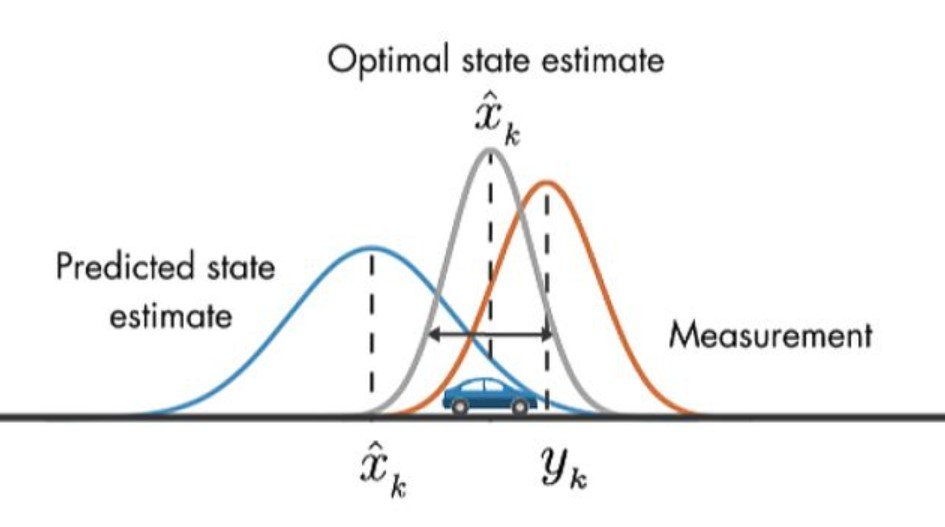
At a high level, a Kalman Filter works in a loop with two repeating phases: prediction and update. In the prediction phase, the filter uses a system model to estimate the next state based on the current state. This model can be as simple as “position changes according to velocity” or as complex as a multi-dimensional motion model in robotics.
In the update phase, the filter incorporates the latest measurement. Instead of blindly trusting the measurement, it weighs it against the prediction. If the sensor is known to be noisy, the filter leans more on the prediction. If the model is uncertain or the sensor is more reliable, the filter gives the measurement more influence. This balancing act is driven by a mathematically derived “Kalman Gain,” which determines how much correction to apply.
The key outcome is not just a better estimate, but also an estimate of uncertainty. The filter tracks its confidence in the current state, and this uncertainty evolves over time as new measurements arrive.
Understanding the Ingredients Behind the Filter
To apply Kalman Filters correctly, it helps to understand the core inputs that govern behaviour.
State, Process Model, and Measurements
The “state” is what you want to estimate. For a moving vehicle, the state could include position and velocity. For a manufacturing process, it could include temperature, pressure, and drift parameters. The process model describes how the state changes over time, typically using a linear equation plus some process noise that captures unmodelled influences.
Measurements are observations related to the state. They may measure the state directly, such as a position sensor, or indirectly, such as a radar measuring distance and angle. The measurement model defines the relationship between the state and what the sensor outputs.
Noise Assumptions Matter
Kalman Filters assume that noise terms follow Gaussian distributions and that the system is linear. In practice, these assumptions are approximations, but they often work well enough to deliver strong results. The filter’s performance depends heavily on tuning two noise components: process noise (how uncertain the model is) and measurement noise (how noisy the sensor is). Poor tuning can make the filter sluggish, overly reactive, or unstable.
Boundary Cases: When Systems Are Not Perfectly Linear
Many systems are not truly linear. For example, orientation tracking involves angles and trigonometric relationships, which are nonlinear. To handle such cases, practitioners often use extensions.
Extended Kalman Filter and Unscented Kalman Filter
The Extended Kalman Filter linearises nonlinear models around the current estimate, using derivatives to approximate behaviour. It works well in many engineering applications, but can struggle when nonlinearity is strong.
The Unscented Kalman Filter approaches the problem differently. Instead of linearising the model, it uses carefully chosen sample points to approximate how uncertainty transforms through nonlinear dynamics. This can provide better accuracy in complex systems, especially when derivatives are difficult to compute or unreliable.
These variants are commonly discussed in applied learning tracks, including an ai course in bangalore, where students move from basic filtering concepts to real-world nonlinear estimation.
Practical Applications in Modern AI and Engineering
Kalman Filters are widely used because they solve a recurring problem: turning messy time-series data into stable estimates.
Tracking and Navigation
In robotics and autonomous systems, Kalman Filters fuse data from multiple sensors such as GPS, IMU, and wheel encoders. Each sensor has weaknesses, but together they provide robust estimates of position and motion.
Industrial Monitoring
In manufacturing and process control, Kalman Filters help estimate latent variables that cannot be measured directly, such as gradual drift in equipment or hidden process states. This supports predictive maintenance and early anomaly detection.
Time-Series Smoothing for Machine Learning
Even in AI workflows, filtered signals can improve downstream model performance. For example, smoothing sensor data before feeding it into a forecasting model can reduce noise-driven variance, improving stability and interpretability.
Implementation Tips for Reliable Results
To use Kalman Filters effectively, keep the setup grounded:
- Start with a simple state definition and add complexity only when necessary.
- Estimate measurement noise empirically by analysing sensor variance.
- Treat process noise as a knob to control responsiveness to unexpected changes.
- Validate on real sequences, not just synthetic data, because real noise is rarely ideal.
- Monitor both estimates and uncertainty. Unexpected uncertainty growth often signals modelling issues.
Conclusion
Kalman Filters provide a structured way to estimate unknown variables from noisy measurements over time. By combining prediction with measurement updates, they produce stable, continuously improving state estimates along with uncertainty tracking. Whether applied in navigation, robotics, industrial monitoring, or time-series preprocessing for AI systems, Kalman Filters remain a practical and reliable tool. With careful modelling and tuning, they help teams turn imperfect data streams into dependable signals for decision-making and control.
